GridinSoft Threat Intelligence
lib_burst_generated.dll threat report
GridinSoft Anti-Malware detection
Detected by GridinSoft before you download
The current ThreatInfo record shows this exact file hash detected as General Threat. Download GridinSoft Anti-Malware to scan the device, confirm whether this file is present, and remove the detected object if it is found.
- Detection name
- General Threat
- Recommended action
- Scan and remove
- Last analysis
- 2026-04-28 23:01:41 (a month ago)
- File hash
- a83a5c72148c1b2c4eac5f6d609a1466
Why it matters
Why GridinSoft flags this file
GridinSoft identifies the sample as General Threat.
First seen 2025-12-17 23:00:30 (5 months ago); latest analysis 2026-04-28 23:01:41 (a month ago).
ThreatInfo has seen this file in user or system paths listed below. Unexpected locations increase the need for local verification.
Recommended action
What to do next
- Compare the MD5 above with the file found on the device.
- Check whether the file appears in the observed locations or under one of the alternate names.
- Run GridinSoft Anti-Malware to confirm the detection and remove the file if it is present.
File context
lib_burst_generated.dll is a Windows file recorded in the ThreatInfo database. The current detection status is General Threat, based on the latest analysis from 2026-04-28 23:01:41 (a month ago).
If lib_burst_generated.dll appears on your computer unexpectedly, treat it as suspicious. Check its location, digital signature, and recent system changes before allowing it to run. A full anti-malware scan is recommended when this file is detected as General Threat.
File Details
| MD5: | a83a5c72148c1b2c4eac5f6d609a1466 |
| Size: | 552 KB |
| First Published: | 2025-12-17 23:00:30 (5 months ago) |
| Latest Published: | 2026-04-28 23:01:41 (a month ago) |
| Status: | General Threat (on last analysis) | |
| Analysis Date: | 2026-04-28 23:01:41 (a month ago) |
Detection screenshot
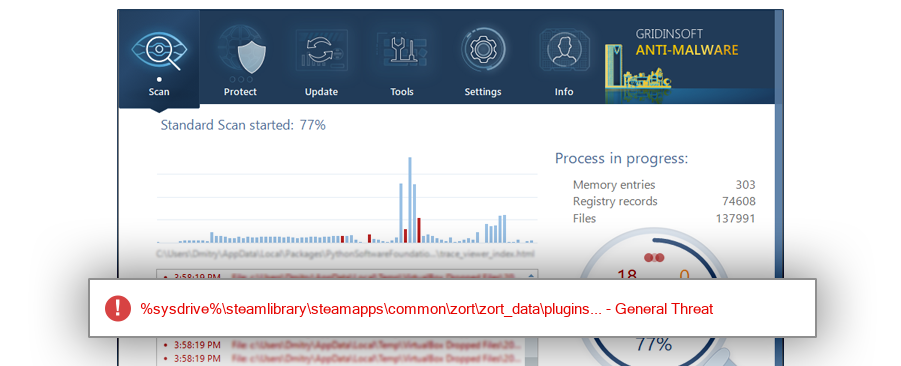
The screenshot is a visual record of a GridinSoft Anti-Malware detection for this sample. Use the hash and metadata above as the primary identifiers when comparing the file on your system.
Common Places:
| %sysdrive%\steamlibrary\steamapps\common\zort\zort_data\plugins |
ThreatInfo has observed lib_burst_generated.dll in the locations listed above. Files found in temporary folders, user profile folders, startup locations, or unusual application directories should be reviewed more carefully than files installed under a known program directory.
Geographic signal
Observed country distribution
ThreatInfo has seen lib_burst_generated.dll across 2 countries. Use this signal to compare local evidence with where the sample is most often reported.
The strongest geographic signal for this file is Italy with 80.0% of observed hits. Geographic distribution can help identify targeted campaigns, regional software bundles, or where a file is most commonly reported.
OS Version:
The most common operating system signal for lib_burst_generated.dll is Windows 10 with 100.0% of observed hits. If your system differs from the common profile, check whether the file was introduced by a specific installer, archive, or removable device.
Analysis
lib_burst_generated.dll is identified as pe for 64-bit systems. The subsystem is Windows GUI. PE header values are useful for triage, especially when they do not match the expected publisher, product, or release timeline.
PE Sections:
Section layout highlights raw-size concentration, repeated names, packer markers, and hashes that can be compared across related samples.
136c854180731504c84b82fc53723237
9e6e9a8212c0c67e86209efd4a2985e6
f41848a091a4b82c35949b86d88868ad
b37a3a4c081b671a3f29c56bdbc5b054
562d5445e66dfc34bc984dc9aca468dd
PE section names and hashes can reveal packing, injected resources, or unusual build artifacts. Sections with uncommon names, very large raw data, or hashes that differ from a trusted copy deserve additional review.
Report conclusion
GridinSoft detects this file as General Threat
This report identifies lib_burst_generated.dll by MD5 a83a5c72148c1b2c4eac5f6d609a1466. If the same file is present on your device, scan the system and remove the detected object after confirming the hash and location.